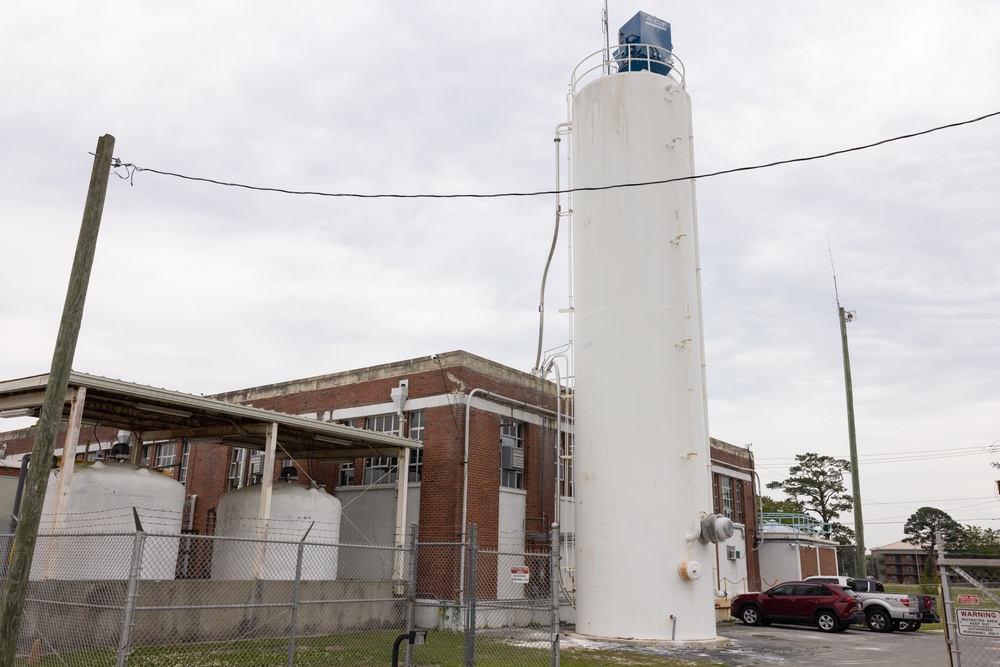
PFAS treatment is often presented as a race to find the technology with the highest removal percentage. That framing is now incomplete. Granular activated carbon, ion exchange, reverse osmosis, nanofiltration, and foam fractionation can all reduce measured PFAS concentrations in water, and some of these technologies are already deployed at full scale. But most do not destroy PFAS. They separate, capture, or concentrate them into another stream, whether spent activated carbon, exhausted resin, regeneration brine, membrane concentrate, foamate, sludge, or an off-site waste shipment.
The central engineering question is therefore not simply: "Which technology removes PFAS from water?" It is: "Where does the PFAS mass go next, and what evidence demonstrates its final endpoint?" This distinction matters in drinking water, municipal wastewater, industrial wastewater, landfill leachate, contaminated groundwater, water impacted by aqueous film-forming foam (AFFF), and spent treatment media. The same technology may be highly useful in one context and a poor fit in another.
The PFAS field is also entering a more consequential phase. Technologies capable of degradation or defluorination are advancing, and some are showing increasingly credible results. Yet the word destruction is still used too freely: a decrease in PFOS, PFOA, or another target compound is not automatically proof that fluorine has been eliminated from the system. A credible PFAS treatment strategy must address the full train:
water or wastewater → capture or concentration → residual stream → final management or destruction → verification
The technologies already in use: essential, but mostly separations
Granular activated carbon
Granular activated carbon, or GAC, is one of the most widely used PFAS treatment technologies for drinking water. It works by adsorbing PFAS onto the internal surface of the carbon. Its strengths are practical:
- it is familiar to water utilities;
- it can be deployed in conventional treatment configurations;
- it can reduce exposure quickly;
- it has a substantial operational history.
Its limitation is equally clear: GAC transfers PFAS from water to carbon. At some point, the carbon breaks through and must be replaced or reactivated. The treatment problem then becomes a spent-carbon management problem.
A full-scale U.S. assessment by Appleman and colleagues (2014) evaluated 15 treatment systems, 18 raw-water sources, two treated wastewater effluents, and 23 PFAS analytes. Their study remains important because it shows real installations rather than idealized laboratory water. It also showed why no single GAC performance number should be generalized across all PFAS, source waters, media types, and operating conditions. Shorter-chain PFAS are often more difficult to capture with conventional GAC, and dissolved organic matter and competing solutes can also reduce effective capacity. A reported adsorption capacity is meaningful only when its feed matrix, contact time, media properties, breakthrough criterion, and PFAS mixture are known. One continuous-flow study of superfine powdered activated carbon combined with ceramic microfiltration (Murray et al., 2019) reported adsorption of approximately 2,990 µg of quantifiable PFAS per gram of carbon under the tested conditions, roughly 480 times that of the GAC comparator used in the same study. This is useful evidence, not a universal verdict on GAC: the result belongs to that feedwater, loading regime, and comparison design.
Ion exchange
Ion-exchange (IX) resins are another important capture technology. Some resins can provide strong removal for PFAS that are difficult for conventional GAC, including certain shorter-chain compounds. They are increasingly relevant for drinking water and selected high-strength wastewaters, though their performance still depends on the PFAS mixture, competing ions, natural organic matter, bed design, resin chemistry, regeneration strategy, and endpoint definition. Like GAC, IX does not make PFAS disappear; it concentrates the problem in exhausted resin or, where regeneration is used, in a smaller but more concentrated regenerant stream. Whether IX "works" is rarely in doubt; it often does. The more useful question is whether the entire train has a defensible endpoint for the PFAS-bearing residual.
Reverse osmosis and nanofiltration
Reverse osmosis and nanofiltration can be highly effective barriers for many PFAS in water. They are especially relevant where a high-quality permeate is required, such as drinking water, industrial reuse, or groundwater remediation. Their trade-off is concentrate management: a membrane system may produce water with very low PFAS concentrations while retaining PFAS in a smaller reject stream. This can be valuable, and it may be the right decision but it is not equivalent to destruction. The cost and feasibility of membrane treatment therefore depend heavily on the concentrate route; if there is no credible route for concentrate management, the PFAS problem has simply been transferred.
Foam fractionation
Foam fractionation is one of the more useful tools for concentrated PFAS streams. Many PFAS are surface-active and preferentially accumulate at air–water interfaces; by generating foam and collecting it, the process can transfer PFAS from a large water volume into a much smaller foamate volume (Smith et al., 2022). This is particularly attractive for landfill leachate, AFFF-impacted water, industrial wastewater, and membrane concentrates.
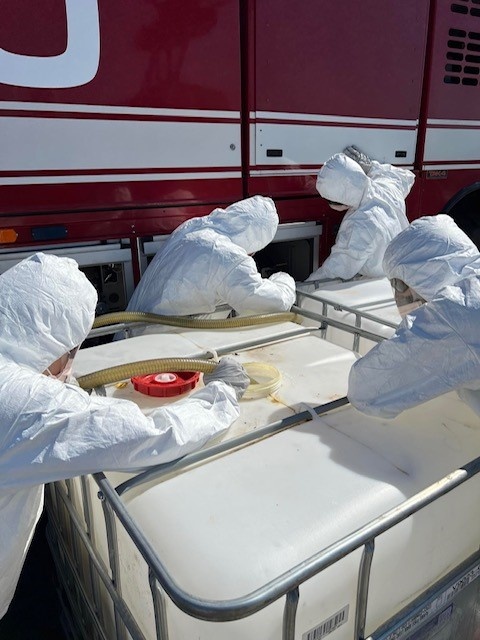
Foam fractionation does not destroy PFAS. It performs a different but important function: it reduces the volume requiring subsequent treatment, which can transform the economics of a destructive process. Treating thousands of cubic metres of dilute water is difficult; treating a much smaller volume of concentrated foamate may be more realistic. But foamate is not an endpoint, it is a residual requiring treatment, destruction, disposal, or storage.
Why wastewater is harder than drinking water
Drinking-water treatment usually starts with a relatively defined objective: protect the finished-water stream. Wastewater treatment is more complex. Municipal systems receive PFAS from households, industrial discharges, landfill leachate, contaminated groundwater, commercial activities, consumer products, and upstream residuals. They also contain solids, biomass, organic matter, and their chemical conditions can influence PFAS partitioning and precursor transformation. Consequently, a wastewater plant can show lower concentrations for some PFAS while showing higher concentrations for others.
A study of nine municipal wastewater treatment plants (Kim et al., 2024) measured 40 PFAS and estimated maximum annual PFAS discharges from individual facilities between 340 and 9,645 g/year. In that dataset, PFOA and PFOS were consistently detected in discharged water above 4 ng/L. Those figures should not be extrapolated to every municipality; their significance is conceptual: low concentrations can still correspond to meaningful annual mass loads when flows are large. The same study found evidence consistent with increases in some short-chain perfluoroalkyl carboxylic acids through treatment, which may reflect precursor transformation rather than new contamination. A treatment plant can therefore change the PFAS profile without solving the total fluorine problem.
An advanced full-scale anaerobic–oxic membrane bioreactor–reverse osmosis train assessed 39 legacy and emerging PFAS (Ika et al., 2025). Its value lies in tracing PFAS through a multistage municipal treatment train; it should not be interpreted as proof that MBR-RO is a universal municipal PFAS solution. The same principle applies to drinking-water systems. A French river and treatment-plant study (Boiteux et al., 2017) reported a mass flow of 3,830 g/day for 6:2 fluorotelomer sulfonamide betaine at one downstream location. The concentration alone would not convey the significance of that loading. PFAS management decisions should therefore use both concentration and mass flow.
A PFAS treatment claim should be no stronger than its evidence
The vocabulary matters. A process may reduce a parent PFAS concentration without having degraded the compound — the PFAS may have moved to a different phase, transformed into another fluorinated compound, or the apparent change may reflect sampling, analytical, or mass-balance limitations. As Smith and colleagues (2024) have argued, effective PFAS destruction technologies cannot be developed without a fluorine mass balance to confirm what actually happened to the fluorine.
A useful evidence ladder is:
| Claim | Minimum evidence required |
|---|---|
| PFAS concentration was reduced in treated water | Defined analyte list, influent/effluent data, flow, QA/QC |
| PFAS mass was captured | Mass balance across water and residual streams |
| PFAS was degraded | Parent loss plus transformation-product assessment |
| PFAS was defluorinated | Quantified fluoride release with controls |
| PFAS was destroyed or mineralized | Fluorine mass balance across relevant liquid, gas, and solid phases |
| The technology is economical | Boundary-defined lifecycle cost assessment |
| The technology is scalable | Repeated field evidence and operating data |
This is not an academic obstacle course. It is the minimum discipline required to avoid false confidence. A recent methodological paper makes the same point: PFAS destruction claims require evidence that distinguishes parent loss, transformation, defluorination, and meaningful fluorine closure (Xu et al., 2026).
Destruction technologies: genuine progress, but uneven evidence
The field is advancing beyond separation. Several technology families may break carbon–fluorine bonds under defined conditions:
- hydrothermal alkaline treatment;
- electrochemical oxidation;
- plasma processes;
- ultrasound;
- supercritical water oxidation;
- photochemical and reductive approaches;
- thermal treatment of spent media and concentrated residuals.
These technologies should not be grouped together as if they have the same maturity or evidentiary strength.
Regulatory guidance has begun to reflect that same caution: EPA's interim guidance on the destruction and disposal of PFAS-containing materials (2026) sets out a hierarchy of preferred technologies based on their potential for uncontrolled environmental release, rather than treating "destruction" as a single, interchangeable category.
Hydrothermal alkaline treatment
Hydrothermal alkaline treatment is among the most promising approaches for concentrated PFAS residuals. A study of high-total-dissolved-solids solutions operated at 250–350 °C with 2–16 wt% sodium hydroxide (Pinkard et al., 2024) reported near-stoichiometric fluorine mass balance under optimized conditions. It also showed that PFAS chemistry matters: perfluoroalkyl carboxylic acids (PFCAs) were more amenable to treatment than several perfluoroalkyl sulfonic acids (PFSAs). That distinction is critical, a technology that performs well for PFCAs cannot automatically be assumed to perform equally well for PFOS, PFHxS, or other sulfonic acids.
A 2026 field-pilot study (Smith et al., 2026) describes hydrothermal alkaline treatment of concentrated industrial wastewater at 300–350 °C and 0.1–0.5 M sodium hydroxide. The study describes fluorine-balance closure ranging from 86% to more than 99% of combined influent total organic fluorine and inorganic fluorine. It also reports near-complete degradation of targeted PFCAs, but only approximately 0–27% degradation for targeted PFSAs in that pilot. This is an important result, not a weakness: it identifies where the technology is presently strong and where it remains limited.
Electrochemical oxidation
Electrochemical oxidation can be attractive for highly concentrated streams, especially after foam fractionation or membrane concentration. A study of foam-fractionation concentrate treated by electrochemical oxidation (Tasca et al., 2026) reported approximately 68% total PFAS reduction, but also observed increases in some perfluoroalkyl carboxylic acids during treatment, consistent with intermediate formation. After extended treatment, some shorter-chain sulfonic acids no longer declined materially showing exactly why parent-PFAS removal cannot be the only metric. Electrochemical systems may have a future role in concentrated residual management, but their deployment must account for energy use, electrode behavior, reaction intermediates, water chemistry, and full fluorine accounting.
Thermal treatment of spent GAC
Thermal treatment or reactivation of spent GAC is particularly relevant because GAC is already widely used for PFAS capture. A full-scale study (DiStefano et al., 2022) reported greater than 99.99% destruction of targeted PFAS through a thermal reactivation furnace and associated air-pollution-control train. However, the reported fluoride mass balance was 61.4%. The proper conclusion is therefore precise: the study supports major reduction of targeted PFAS through that treatment train, but it does not establish complete mineralization of all fluorinated material. This distinction should strengthen confidence in the field, not weaken it but it shows that the remaining technical question is measurable.
Ultrasound, plasma, and other emerging approaches
Ultrasound, plasma, supercritical water oxidation, and advanced reduction methods deserve continued attention. A 2024 ultrasound study (Marsh et al., 2024) is notable because it used a mass-balance-oriented approach involving targeted PFAS analysis, fluoride measurement, and fluorine nuclear magnetic resonance which the right analytical direction. But promising science is not the same as broad field readiness.
The decisive questions remain:
- Does the technology work in a real waste matrix?
- Does it address both carboxylic and sulfonic acids?
- Are fluorinated intermediates measured?
- Does fluorine mass balance close?
- What are the electricity, chemical, corrosion, and emissions burdens?
- Can the system operate reliably at a meaningful scale?
The cost question is larger than the treatment unit
PFAS cost discussions often stop too early. They compare the capital or operating cost of GAC, IX, RO, foam fractionation, or a destruction reactor. However, the true cost belongs to the complete management chain:
Lifecycle cost = capital + energy + media and chemicals + labor + monitoring + residual handling + transport + destruction or disposal + long-term liability
The U.S. EPA has developed cost analyses for drinking-water technologies including GAC, IX, RO/NF, and point-of-use or point-of-entry treatment (U.S. EPA, 2024). These are useful engineering references, but they should not be transplanted directly into municipal wastewater, industrial wastewater, foamate, or landfill-leachate applications.
A defensible cost comparison should state:
- the influent matrix;
- PFAS concentration and mass loading;
- the target analytes;
- the treatment objective;
- media replacement or regeneration requirements;
- concentrate, foamate, or spent-media management;
- analytical monitoring requirements;
- the assumed final PFAS endpoint;
- the time horizon.
The industry should be cautious with claims that one technology is "low cost." A low-cost capture process may become a high-cost lifecycle solution if residual management is excluded.
A practical way to select a treatment train
A credible PFAS treatment decision starts with the stream, not the technology.
For drinking water
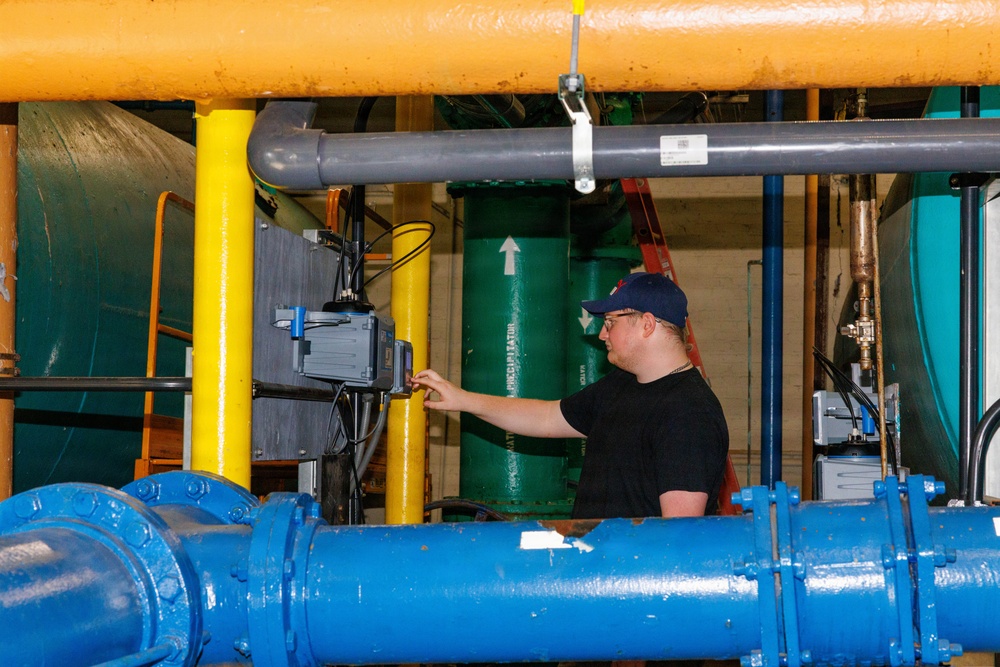
The priority is usually a reliable finished-water barrier. GAC, IX, and membranes may all be appropriate; the decision should be based on source-water chemistry, PFAS mixture, required treatment level, media or concentrate management, footprint, and lifecycle cost.
For municipal wastewater
The priority is usually mass management, not simply compliance at one outlet. The assessment should include influent, effluent, sludge, biosolids, recycle streams, and any advanced-treatment residuals. A plant-level PFAS mass balance is more informative than a single effluent concentration.
For landfill leachate, AFFF water, and industrial wastewater
The priority may be concentration before destruction. Foam fractionation, membranes, or selective capture may reduce the volume requiring intensive downstream treatment; hydrothermal, electrochemical, thermal, or other destructive technologies may then become technically relevant.
For spent media and concentrates
The question becomes final endpoint management. The preferred option should be supported by evidence on targeted PFAS, total fluorine, transformation products, emissions, residuals, and operating conditions.
The direction of travel
PFAS management is moving from a narrow removal question toward a full treatment-train question. Capture technologies will remain essential: they protect drinking water now, they can control contaminated plumes, they can reduce PFAS mass discharged from specific streams, and they can create concentrated residuals that are more feasible to treat. But capture alone is not the end of the story.
The most promising future lies in treatment trains that combine:
- reliable capture or concentration;
- volume reduction;
- a technically credible destruction or management endpoint;
- measurement capable of proving what happened.
The field does not need stronger marketing claims. It needs stronger mass balances. The standard for future PFAS projects should be simple: state what is removed from water, state where it goes, state what happens there, and show the evidence.
Sources
- Appleman, T.D., Higgins, C.P., Quiñones, O., Vanderford, B.J., Kolstad, C., Zeigler-Holady, J.C., Dickenson, E.R.V. Treatment of poly- and perfluoroalkyl substances in U.S. full-scale water treatment systems. Water Research, 2014.
- Boiteux, V., Dauchy, X., Bach, C., Colin, A., Hemard, J., Sagres, V., Rosin, C., Munoz, J.-F. Concentrations and patterns of perfluoroalkyl and polyfluoroalkyl substances in a river and three drinking water treatment plants near and far from a major production source. Science of the Total Environment, 2017.
- DiStefano, R., Feliciano, T., Mimna, R.A., Redding, A.M., Matthis, J. Thermal destruction of PFAS during full-scale reactivation of PFAS-laden granular activated carbon. Remediation Journal, 2022.
- U.S. Environmental Protection Agency. PFAS Treatment Technologies and Costs for Drinking Water. 2024.
- U.S. Environmental Protection Agency. Interim Guidance on the Destruction and Disposal of PFAS and Materials Containing PFAS. 2026.
- Ika, A.R., Lin, S.-F., Wang, C.-L., Chang-Chien, G.-P., Huang, B.-W. Occurrence, partitioning, and fate of per- and polyfluoroalkyl substances (PFAS) in a full-scale AO–MBR–RO municipal WWTP. Journal of Water Process Engineering, 2025.
- Kim, J., Xin, X., Hawkins, G.L., Huang, Q., Huang, C.-H. Occurrence, Fate, and Removal of Per- and Polyfluoroalkyl Substances (PFAS) in Small- and Large-Scale Municipal Wastewater Treatment Facilities in the United States. ACS ES&T Water, 2024.
- Marsh, R.W., Kewalramani, J.A., Bezerra de Souza, B., Meegoda, J.N. The use of a fluorine mass balance to demonstrate the mineralization of PFAS by high frequency and high power ultrasound. Chemosphere, 2024.
- Murray, C.C., Vatankhah, H., McDonough, C.A., Nickerson, A., Hedtke, T.T., Cath, T.Y., Higgins, C.P., Bellona, C.L. Removal of per- and polyfluoroalkyl substances using super-fine powder activated carbon and ceramic membrane filtration. Journal of Hazardous Materials, 2019.
- Pinkard, B., Smith, S.M., Vorarath, P., Smrz, T., Schmick, S., Dressel, L., Bryan, C., Czerski, M., de Marne, A., Halevi, A., Thomsen, C., Woodruff, C. Degradation and Defluorination of Ultra Short-, Short-, and Long-Chain PFASs in High Total Dissolved Solids Solutions by Hydrothermal Alkaline Treatment. ACS ES&T Engineering, 2024.
- Smith, S.J., Lauria, M., Higgins, C.P., Pennell, K.D., Blotevogel, J., Arp, H.P.H. The Need to Include a Fluorine Mass Balance in the Development of Effective Technologies for PFAS Destruction. Environmental Science & Technology, 2024.
- Smith, S.J., Wiberg, K., McCleaf, P., Ahrens, L. Pilot-Scale Continuous Foam Fractionation for the Removal of Per- and Polyfluoroalkyl Substances (PFAS) from Landfill Leachate. ACS ES&T Water, 2022.
- Smith, S.M. et al. Demonstration of hydrothermal alkaline treatment for PFAS destruction in industrial wastewater: assessment of degradation, defluorination, fluorine mass balance, and potential for volatile organofluorine formation. Chemical Engineering Journal, 2026.
- Tasca, A.L., Ladisa, S., Kumpiene, J., Carabante, I. Electrochemical treatment of PFAS in fractionated foam. Frontiers in Environmental Science, 2026.
- Xu, S., Wang, S., Kang, Z., Lu, J., Zimmerman, A.R., Kilduff, J., Gao, B. Establishing evidence-based standards for PFAS destruction pathway claims. ACS ES&T Engineering, 2026.
Komla Alokpa, Eng. (graduate), MASc, PhD is a Water Treatment Scientist. His work focuses on the design, modeling, and evaluation of drinking water and wastewater treatment processes, including PFAS management.